
Winter driving in Indiana means snow, ice, slush and plenty of road salt!
For pickup truck owners, winter can also mean looking for ways to improve traction when roads get slick. One old-school solution is to throw a few heavy bags of rock salt in the truck bed to add weight over the rear wheels. It sounds practical. You get extra weight for traction, and if you get stuck, you’ve got salt with you.
But putting bags of road salt in your truck bed can create a problem you probably weren’t planning on: rust and corrosion.
At Burnside Express Collision, we know how quickly a small scratch, chip or exposed area can turn into a much bigger body repair problem when corrosion gets involved. Before you load your truck bed with salt this winter, here’s what you should know.
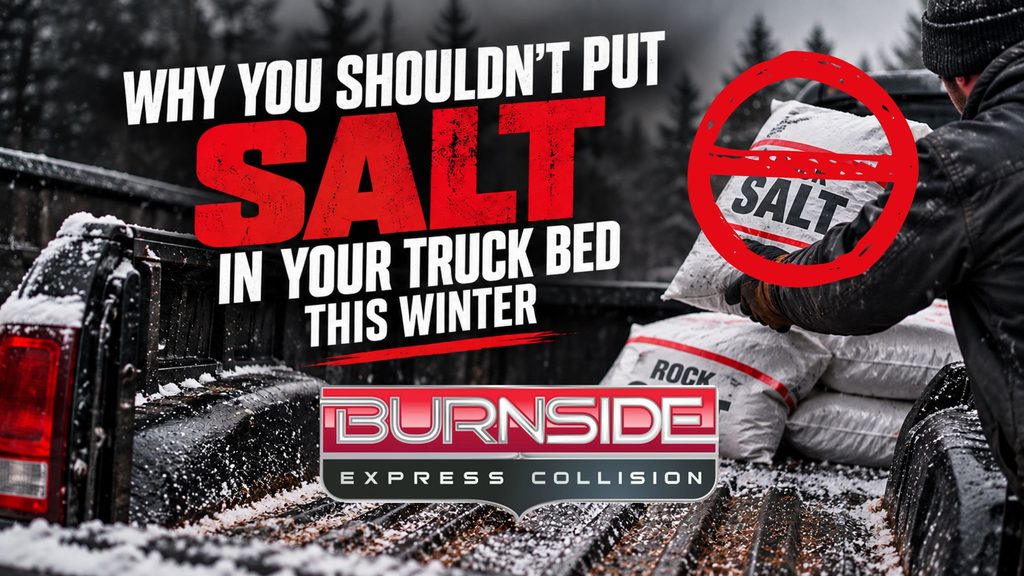
You Don’t Want a Bag of Salt to Break Open in Your Truck Bed…
This is the big problem. Those bags of rock salt aren’t necessarily going to stay perfectly sealed all winter. They’re sitting in the back of a truck where they can slide around during acceleration, braking and turns. They’re also exposed to snow, rain and moisture.
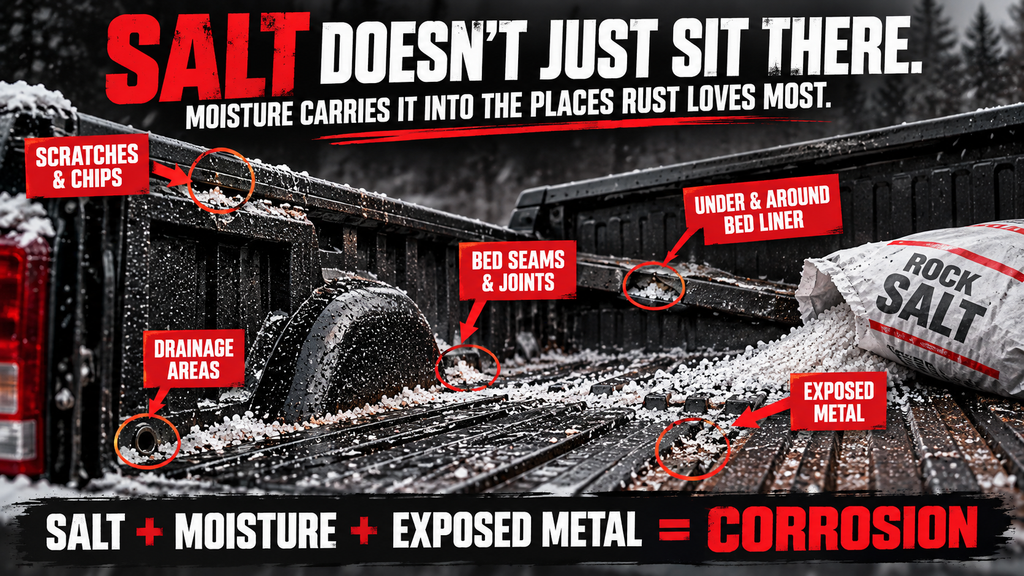
Eventually, a bag can tear, develop a hole or begin deteriorating. Now you’ve got loose road salt sitting directly in your truck bed. Add melting snow or rain, and you’ve introduced moisture to the equation as well. That’s where the trouble starts.
Salt can settle into:
- Scratches and chips in the truck bed
- Seams and joints
- Drainage areas
- Areas where a bed liner or protective coating has been damaged
- Small areas of exposed metal you may not even realize are there
Does Road Salt Cause Trucks to Rust?
Road salt significantly accelerates the corrosion process when water, oxygen and exposed metal are present. That’s one reason vehicles driven through snowy climates can develop corrosion much faster than vehicles that aren’t regularly exposed to road de-icing chemicals.
The problem is significant enough that AAA has previously estimated that millions of U.S. drivers have faced vehicle repairs associated with rust damage caused by road de-icing methods.
AAA’s research also found that corrosion-related repairs can affect much more than a vehicle’s appearance. Prolonged exposure can contribute to deterioration of important vehicle components, including brake, fuel and exhaust systems.
Research: AAA – Road De-Icers and Rust Damage
Your truck is already being exposed to plenty of salt as is
During an Indiana winter, road salt, brine and other de-icing materials can get thrown onto your:
- Wheel wells
- Rocker panels
- Lower body panels
- Undercarriage
- Suspension components
- Brake components
- Exhaust system
You can’t completely avoid winter road treatments when you’re driving around Central Indiana, but you can avoid intentionally keeping a concentrated pile of salt inside your truck bed for months at a time.
What Should You Put in Your Truck Bed for Winter Weight Instead?
Alternatives can include:
- Sandbags
- Tube sand
- Purpose-built truck bed ballast or traction weights
- Other secured, non-corrosive ballast appropriate for your vehicle
Whatever you choose, don’t just throw heavy objects loosely into the bed. Additional weight should be properly secured so it doesn’t slide around during normal driving or become dangerous during sudden braking or a collision.
Check your truck manufacturer’s recommendations before adding significant weight. Your truck has payload limitations, and more weight isn’t automatically better.
1. Protect Your Truck From Road Salt This Winter
Even if you never put a single bag of salt in your truck bed, Indiana roads are going to expose your vehicle to plenty of corrosive material throughout the winter. A little preventative maintenance can go a long way.
2. Wash Your Truck Regularly
Don’t let road salt remain on your vehicle indefinitely. Pay particular attention to the undercarriage, wheel wells and lower body panels, where salty road spray tends to accumulate.
3. Don’t Ignore Scratched or Chipped Paint
Your vehicle’s paint isn’t just there to make it look good. The paint and protective coatings help separate the underlying metal from the environment.
4. A scratch or chip can compromise that protection.
If you notice damaged paint (especially before or during winter) addressing it early may help prevent corrosion from getting established underneath the damaged area.
5. Check Your Truck Bed
Truck beds take a beating. Tools, lumber, equipment and cargo can scratch the bed throughout the year. Before winter arrives, take a look for damaged paint, exposed metal, bubbling finishes or other signs that the bed’s protection has been compromised.
6. Don’t Let a Small Spot Become a Bigger Body Repair
Rust doesn’t usually announce itself as a major problem overnight. It can start around a small paint chip, scratch or damaged area and continue underneath the surrounding finish. What begins as a cosmetic problem can eventually require much more extensive repair.
If you notice paint damage, bubbling, rust, dents or other body damage, having it inspected sooner rather than later can help you understand what you’re dealing with.
7. Winter Truck & Auto Body Repair in Central Indiana
Indiana winters can be rough on vehicles. Between potholes, slick roads, snow, ice and corrosive road treatments, your truck’s exterior takes plenty of abuse.
Burnside Express Collision provides professional auto body and collision repair for drivers throughout Central Indiana, with convenient locations in Greenwood, West Indianapolis and Zionsville.
Whether winter has left you with damaged paint, a dented body panel or collision damage, the Burnside team can help get your vehicle looking right again.
Before you load up your truck for winter, remember: Add traction if your truck needs it, just leave the road salt on the road.
CONTACT BURNSIDE EXPRESS COLLISION
Frequently Asked Questions About Road Salt & Truck Beds
Does salt in a truck bed cause rust?
Salt can accelerate corrosion when it comes into contact with moisture and exposed metal. If your truck bed has scratches, chips or areas where its protective coating has been compromised, leaving loose salt in the bed can create conditions that encourage corrosion.
Is it bad to put bags of salt in a truck bed?
Using sealed bags of salt as temporary weight doesn’t guarantee that your truck will rust. The problem is that bags can tear, leak, absorb moisture or slide around. Once loose salt is sitting against damaged paint or exposed metal, you’ve created unnecessary corrosion risk.
What should I use instead of salt for weight in my truck bed?
Sandbags, tube sand and purpose-built truck bed ballast systems are alternatives to road salt. Any additional weight should be properly secured and appropriate for your truck’s payload capacity. Check your manufacturer’s recommendations for your specific vehicle.
How does road salt damage a truck?
Road salt and other de-icing chemicals can accelerate the electrochemical corrosion process when moisture and exposed metal are present. Over time, corrosion can affect body panels as well as components underneath the vehicle.
How do I prevent road salt from rusting my truck?
Regular winter washing can help remove accumulated road salt and grime. Pay particular attention to the undercarriage, wheel wells and lower body panels. Repairing chipped or damaged paint can also help prevent exposed metal from remaining vulnerable to moisture and salt.
Should I wash underneath my truck after driving on salted roads?
Yes. Washing the undercarriage helps remove accumulated road salt and de-icing chemicals from areas that can otherwise be difficult to see or clean. This is especially worth considering throughout an Indiana winter when your vehicle is repeatedly exposed to treated roads.
Can Burnside Express Collision repair winter body damage?
Yes. Burnside Express Collision provides collision and auto body repair services in Central Indiana. If winter driving has resulted in dents, damaged paint or collision damage, contact Burnside to schedule an estimate at the location most convenient for you.